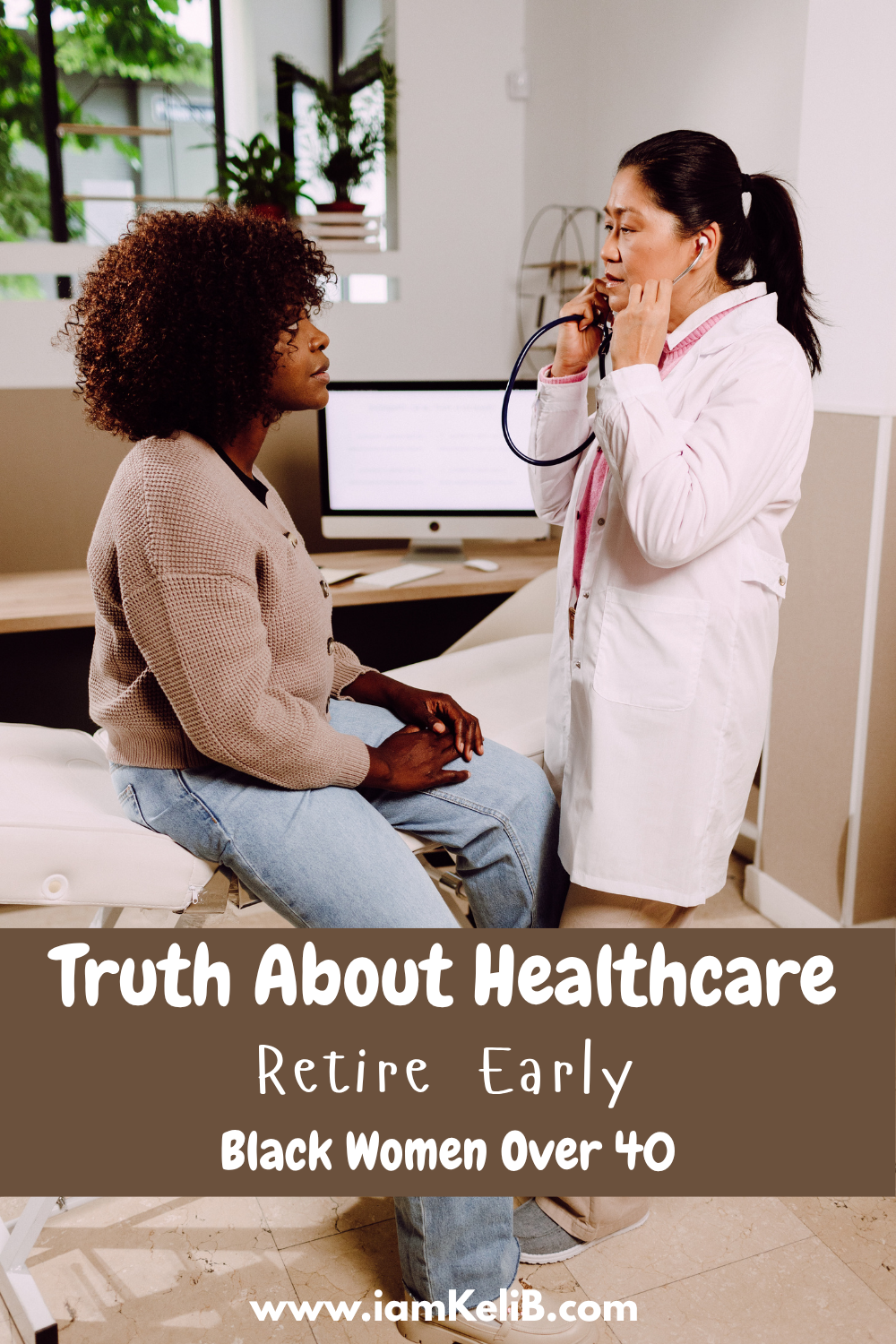
The Truth About Healthcare If You Retire Early (What Nobody Explains)

Healthcare in early retirement deserves a place in your plan before you resign. Sis, we can spend so much time thinking about leaving work that we forget to ask what happens to the benefits that came with the job.
As I work toward my goal of retiring at 55, I want to understand what my everyday life will actually cost. That includes seeing a doctor, filling a prescription, and getting care when something unexpected happens.
Black women over 40, let’s give this part of our future some attention now. Knowing your options can help you make a more informed decision about when and how to retire.
Why Healthcare in Early Retirement is More Than a Monthly Premium
The premium is what you pay to keep your insurance active. But that payment does not tell you everything you could spend on care.
Depending on your plan, you may also pay a deductible, copayments, or coinsurance. Prescriptions, specialist visits, and dental and vision needs belong in the conversation, too.
Here’s a detail I want us to understand: an out-of-pocket maximum is not a cap on every healthcare dollar you spend. For market plans, it limits your spending on covered, in-network care during the plan year. Premiums, services the plan excludes, and out-of-network care generally fall outside that limit.
That’s why I want to look beyond the monthly price when comparing coverage.
Understanding the Years Before Medicare
In the United States, Medicare generally becomes available at 65 for people who meet eligibility requirements, although some people qualify earlier because of disability or certain conditions. Retiring from your job does not automatically make you eligible.
For someone aiming to retire at 55, that could mean planning for roughly ten years before medicare eligibility.
If you retire before 65 and lose job-based insurance, you can shop for a marketplace plan. Losing that coverage can qualify you for a special enrollment period. Financial assistance depends on eligibility factors, including household income and size, so use an accurate estimate of retirement income when exploring cost.
Confirm enrollment deadlines and your new plan’s start date before leaving work.
Your Healthcare in Early Retirement Planning Checklist
Before choosing a retirement date, write down these details for each plan you’re considering:
- Monthly premium: What will you actually pay, based on your eligibility and household information?
- Deductible and out-of-pocket maximum: What costs might you need to cover in a year when you use more care?
- Prescriptions: Are your medications covered, and at what cost?
- Doctors and specialists: Are the providers and hospitals you want in-network?
- Dental and vision: What is included, and what needs separate coverage or saving?
- Emergency buffer: How much money will be available for unexpected expenses or services insurance doesn’t cover?
Sis, having a policy and having coverage that fits your needs are both worth checking.
Build Healthcare Into Your Retirement Number
Give healthcare its own line in your retirement budget. Include premiums, expected out-of-pocket spending, and a reserve for a more expensive year.
Keep that reserve separate in your calculations so you don’t count the same money twice. Review your estimates regularly because premiums, benefits, and your care needs can change. Allow room for rising costs over time.
I want my retirement budget to reflect what it takes to live comfortably and get the care I need.
Three Ways to Give Yourself More Options
Consider part-time work with benefits. If a gradual transition appeals to you, look into positions that offer coverage. Verify eligibility, required hours, waiting periods, and employee premiums before relying on that option.
Build a dedicated healthcare fund. Setting aside money specifically for planned healthcare costs can help you see what you’ve prepared for. Keep your general emergency savings available for other surprises.
Adjust your date if the numbers call for it. An additional six to twelve months of work might provide time to save more or arrange coverage. Calculate what that extra time would accomplish rather than assuming it will close the gap.
Choose the version of retirement That Works for you
For me, freedom includes having options. That might mean leaving a demanding role, working fewer hours, or stepping away from work completely when the plan supports it.
Healthcare in early retirement is part of making those choices with more clarity. You deserve to know how you’ll care for yourself in the life you’re working toward.
Comment “HEALTH” if you’d like a healthcare planning checklist. And watch my video on early retirement planning to connect costs to your bigger retirement goal.